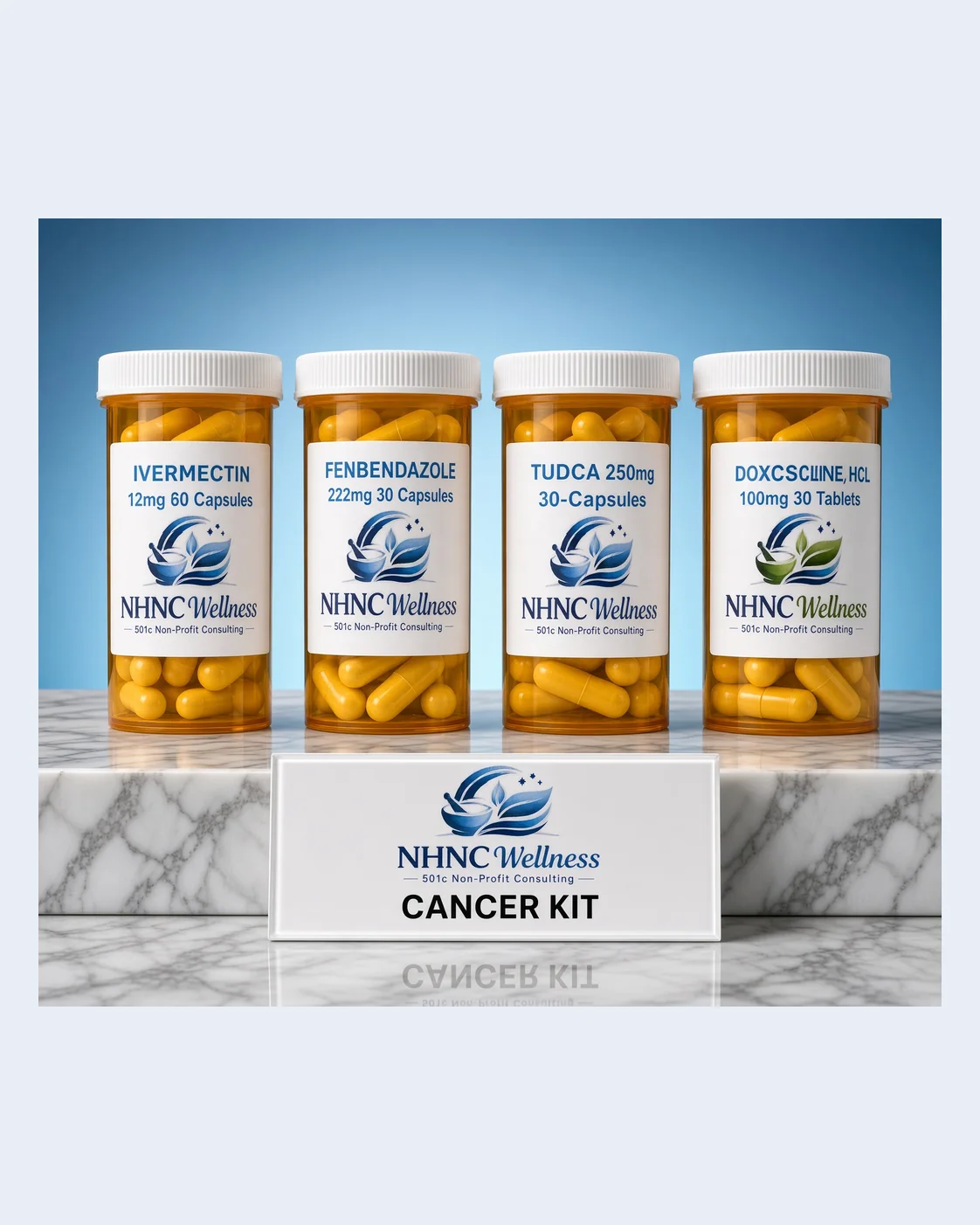
This one-month research protocol combines Ivermectin, Fenbendazole, TUDCA, and a Doxycycline trial. The notes below are educational only. These items are not FDA-approved to treat cancer. Lab and animal findings are not proven human benefit. Use only under licensed medical review.
Ivermectin
Nobel Prize parasite therapy, now studied in oncology research
Discovered in the 1970s by Satoshi Ōmura and William Campbell. Approved in 1981 for parasitic disease, including river blindness.
Lab and animal studies report slowed tumor growth, reduced invasion, cancer-cell death, and possible synergy with chemotherapy. Models have included breast, colorectal, leukemia, and lung tumors. Human evidence is limited. These uses are experimental, not approved cancer indications.
Fenbendazole
Veterinary parasite medicine studied in cancer models
Used since the 1970s in animals for intestinal worms. It blocks parasite nutrient uptake and damages microtubules.
Lab and animal studies report slower cancer-cell growth, tumor shrinkage in models, and possible help with some chemotherapy. Models have included colorectal, lung, breast, and leukemia. Not an FDA-approved cancer therapy.
TUDCA
Liver support
Included to support the liver during the protocol and help handle metabolic stress sometimes called “die-off.” Supportive care only, not a cancer treatment.
Doxycycline
Antibiotic for many infections
Used for infections of the skin, lungs, and urine, and for malaria prevention. Research commentary discusses possible effects on cancer stem-like cell energy use and tissue-invasion enzymes. That use is experimental and not approved for cancer.
Public research commentary cited on the clinic flyer includes Nicolas Hulscher, Dr. Zakaria, MD, and Dr. William Makis. This is not a substitute for oncology care.